

By Daniel Paiz
Artificial Intelligence, questioning what is human, and so much more make up the futuristic Sci-Fi film The Creator, directed by Gareth Edwards (Rogue One). In this Cypher Flicks Review, there’s much to ponder when it comes to the roles of Joshua (John David Washington), Maya (Gemma Chan), Alphie (Madeleine Yuna Voyles), and several others. Harun (Ken Watanabe) and Colonel Howell (Allison Janney) both play key roles in this intriguing take on A.I. versus humans, East versus West film.
Emphasis will be placed on not spoiling anything, but there might be a few things here and there that could be considered light spoilage. Read with this in mind.
A Brief Synopsis
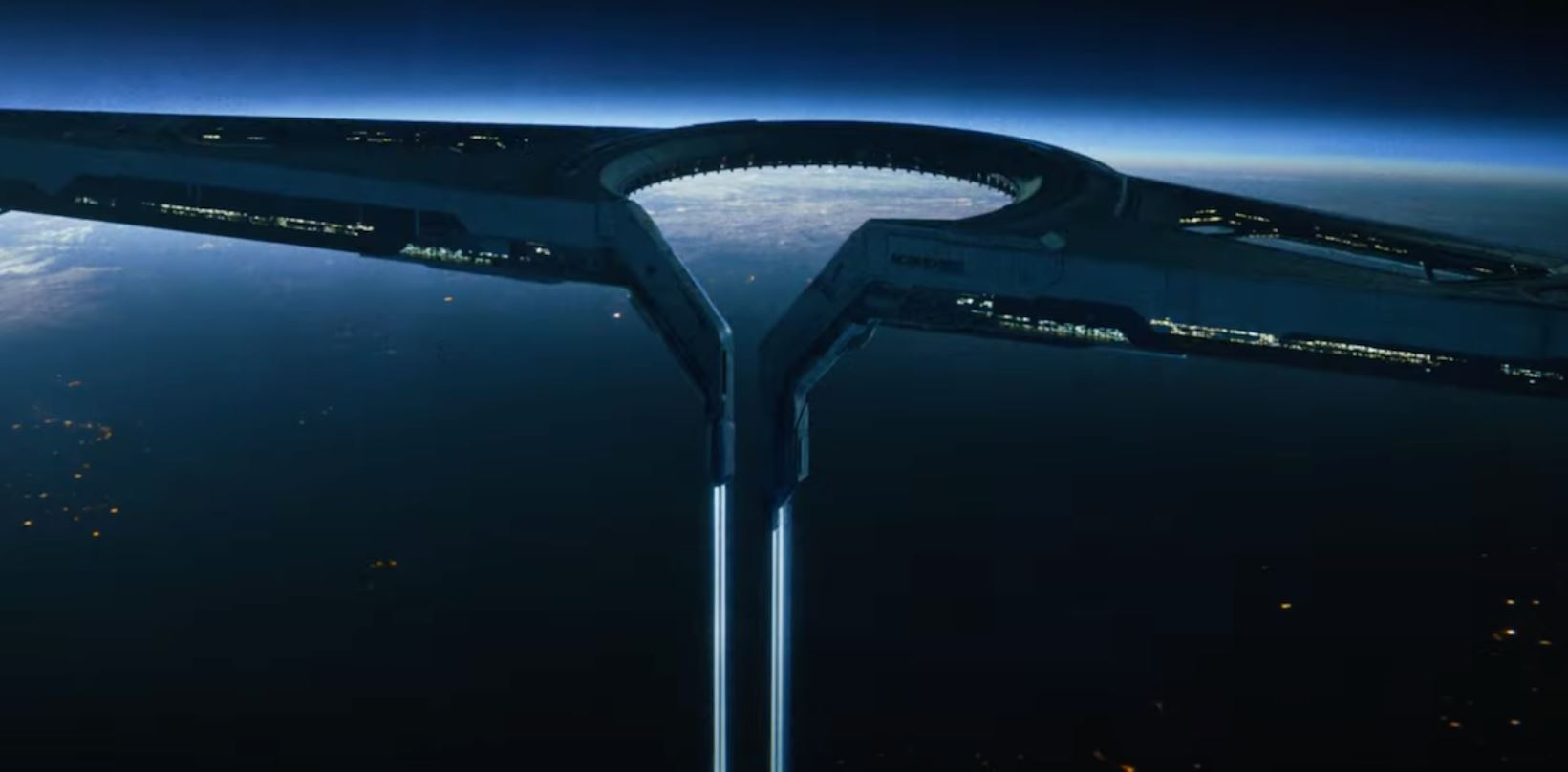
Joshua and Maya have been together for some time amidst a war between the West (mainly the United States) and the East (collectively called New Asia) around the time of 2065. The US has a giant spaceship called “NOMAD”. This ship is used to hunt down artificial intelligence (called simulants) and those who continue to work with A.I. after a major disaster in Los Angeles causes the West to lose all trust in any partnership with A.I.
New Asia has a leader called “Nimrata”, who is the builder of A.I. simulants, and those entrusting Nimrata (a Sikh term for humility or benevolence) believe humans and A.I. living together is the future. The US uses NOMAD to hunt, while Joshua searches for Nimrata and what the West believes is a weapon that could destroy their side. Turns out, the “weapon” is a child named Alphie, who is an A.I. child. Understandably, Alphie can lead to a number of outcomes, and the interaction between Alphie and humans, especially Joshua, will lead to an intriguing conclusion.
West vs. East
Symbolism
Circular items seemed to appear more often when in New Asia, adding to the idea that time is not so much linear but circular (the yin and yang symbol comes to mind). People in New Asia would discuss how AI is the evolution, and how slavery would not happen to the humans and simulants there. Referencing Buddhism, Taoism, etc. also added to this circular perspective of life, which was another stark contrast to those hunting the simulants.
NOMAD as the giant ship in the sky was called brought about two visual ideas as the film went on: Christianity and guns. The light beaming down from the center of the ship occasionally made it look like a giant cross. However, since the light wasn’t always in use, the shape of the ship is quite bluntly like a gun.
The United States, whose name is slapped all over the larger tank-like vehicles in the final chapter, is no stranger to blunt force. It works for them in the final third of the film, but only so much. Things go sideways when they underestimate the other side.
While the grander idea here is the shoot first, ask questions later approach of the West, it inescapably also refers to our current times where the US cherishes this role of world police. Just as there are protests against the actions of NOMAD in the film, here in 2023 that sentiment is alive and well towards the US. That mindset, as the finale shows, likely will be the undoing of the stars and stripes.

Love, Pain, and Women are the key
Science Fiction likes to address grander themes in futuristic settings. Despite the ongoing war between East and West, the motor of this film is how these characters deal with love and pain. Joshua is driven by getting back to Maya, despite who she is and despite what it will cost him if he fails. Colonel Howell is driven by a similar force but lacks the one possibility Joshua can still attain: hope. To avoid spoilers why that loss of hope will be omitted here, but as the conflict escalates it’s clear how far apart the motives are for these two characters.
Howell embodies the role of the West: manipulative, ruthless, and omitting key facts when working to gain the aid of others (such as Joshua). Info is on a need-to-know basis and stays that way throughout. There is little to no reflection on the consequences of actions taken, due to the overall goal being justified if achieved. Pain is a major motivator, and Howell has it in abundance.
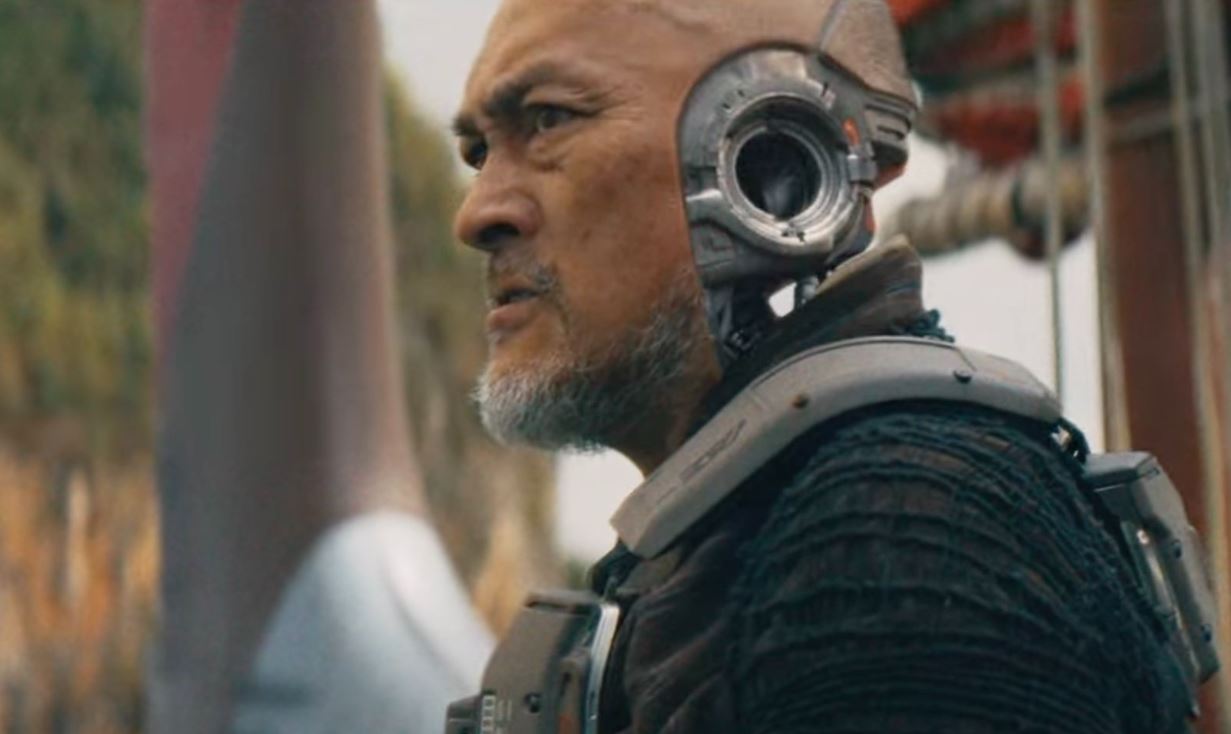
Maya has a connection both to Joshua and the Nimrata. Her father taught her all she knows about A.I. and growing up with simulants made her sympathetic to their wish to coexist. What she learns and from Harun and this mixture of humans and simulants drives her focus on helping to end the war.
Her partnership with Joshua intensifies that focus and becomes a beacon of sorts as things unfold. Harun reminds Joshua of this several times and it will be important to remember for his growth. Alphie, a child simulant, assumes the gender roles of a girl, and has their part to play as well.
Hiding from Accountability
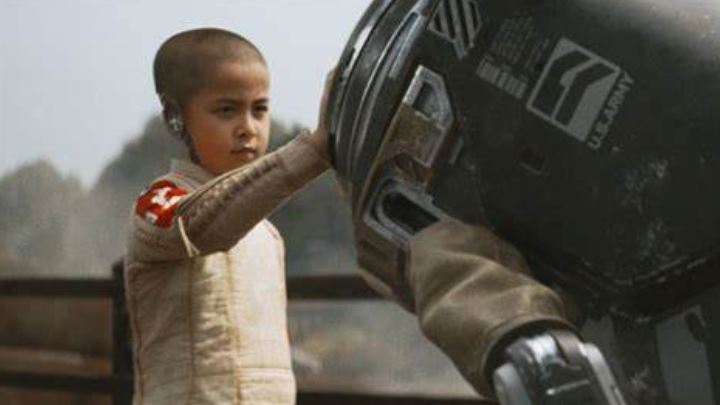
The disaster in Los Angeles is a nuclear weapon dropped in the city, killing millions. This act is blamed by the US on New Asia. However (minor spoiler), it’s revealed by Harun that it was a human error that led to the drop, not one made by A.I. It clearly sickens Harun, and definitely made this movie goer feel quite similar.
This lines up with the lack of accountability the US and their allies take when they commit an error, which leads to deadly harm in the film and today. A.I is made out to be the boogeyman, which justifies taking action without fear or reprimand. Even the US soldiers mention they’re “turning off” the A.I. and not ending their existence.
As the film progresses, it becomes easier and easier to cheer for Joshua, Alphie, and New Asia. Joshua becomes more accountable as the film progresses. His love for Maya and yearning to see her again leads him to reconcile previous actions taken. Few other characters have half as much growth as he does. This contrasts with how singularly focused the US is in obtaining the weapon rumored to have been made by the hands of Nimrata.
Final Verdict
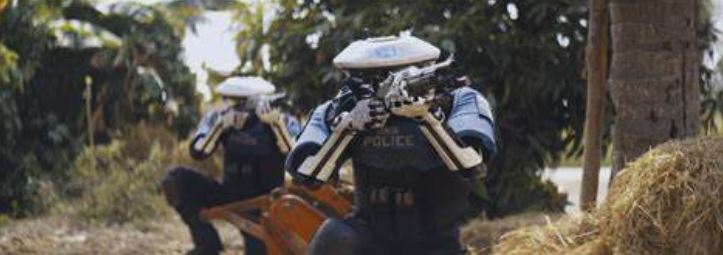
This film relies on the East versus West, robots versus humans ideas quite a bit. What makes it work though is wrestling with that idea of hope versus fear. Wrestling with that idea that A.I. is not the boogeyman it’s made out to be by the West. By all means technology is growing and its understandable change brought along by that could result in job loss, loss of privacy, the list goes on. However, if one sits their wringing their hands and clutching their pearls, technology passes them by due to ignorance of how to use it, further increasing fear and inaction.
That’s not to say that everyone should hail the pending robot overlords taking over all control, making humans into fuel or slaves. Technology has its bugs and defects, and that type of takeover really could take until 2065 or later (where the majority of you reading this will be elderly or dead). In all seriousness, human nature won’t allow such a thing due to fear and the need to wield the bigger stick.
Lastly, there are some reviews stating that things weren’t hashed out enough and more character development needs to happen. This is strange to me, because for example if more scenes were devoted to Joshua and Maya, it would take away from the overall story. It’s made abundantly clear how much they care for each other.
Each character audiences encounter plays a certain piece of the puzzle. To focus more on any of those pieces would lead to an incomplete picture, and this picture is pretty good. Sci-Fi films don’t have the space to tell, they show and then expect the viewer to line pieces together. The Creator is an enjoyable and visually stunning film, reminding one that knowledge and not fear should guide one through life.
 Cypher Sessions