

By Daniel Paiz
Cypher Flicks reviews Transformers One as new lore revisits age old questions in life. Justice versus vengeance, flawed beings versus rigid heroes, and of course adaptable versus reactive are all concepts swirling throughout the plot. Per usual, Cybertron has more than meets the eye developing.
This animated film is the first in quite some time to reach the silver screen. largely due to the commercial success of the live-action spectacles Michael Bay kept rolling out over the years. This Transformers offers up a new beginning in multiple ways, as the longtime rivals Megatron (Brian Tyree Henry) and Optimus Prime (Chris Hemsworth) are friends as humble mining bots D-16 and Orion Pax.
[Editor’s Note: brief plot points are listed to expand upon ideas but there’s light spoiling. The ending isn’t given away and what one character does is fairly expected as the film proceeds on. This is your warning if you think it will spoil it for you.]
Lore helps explain decision-making
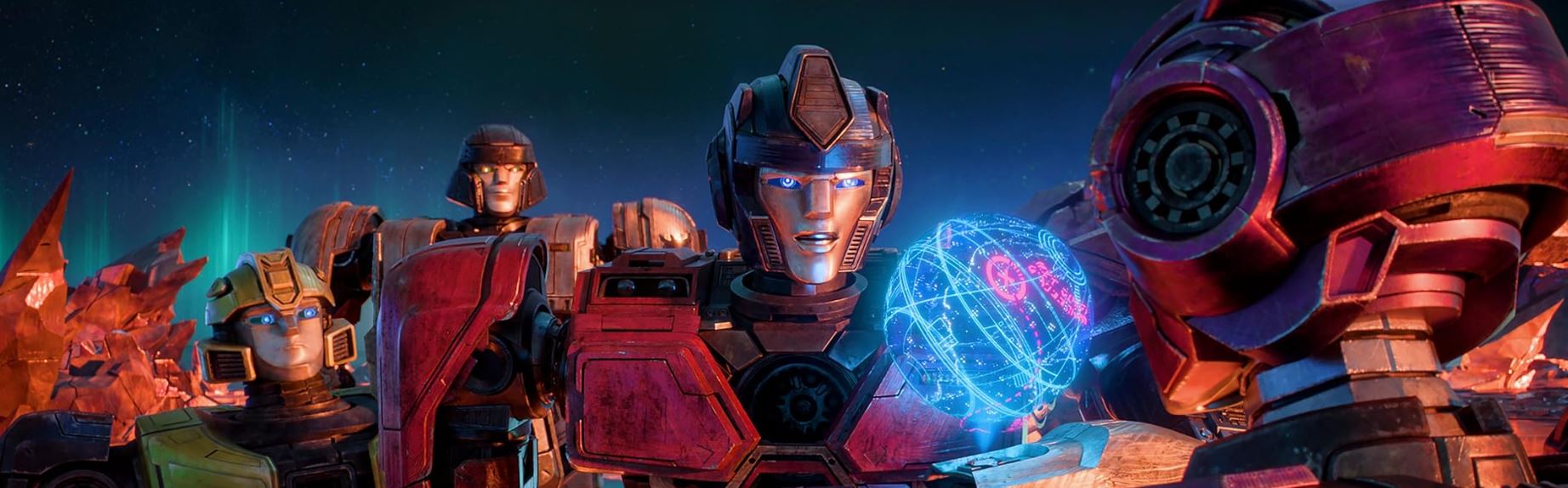
A great deal of lore is central to understanding the decisions and outlooks of characters in this film. Orion, D-16, Elita (Scarlett Johansson) and B-127/Bumblebee (Keegan-Michael Key) all believe and appreciate in various amounts the Elder Primes and what permits the creation of Energon, the Matrix of Leadership. When the Elder Primes battle their great enemy known as the Quintessons, they all falter save for Sentinel Prime (Jon Hamm).
He becomes the new leader of Cybertron and oddly enough needs Energon to be mined since the Matrix has disappeared after this great battle. One can likely guess why that is, but a surface trip by our group of four to the surface leads them to meeting one remaining Elder Prime who still survives: Alpha Trion (Laurence Fishburne).
Alpha tells them of what’s happened with Sentinel and how they should all still have their transformation cogs (only Sentinel Prime and a few others have theirs). From there is where things start to change between Prime and Megatron, and what draws this fan’s attention.
Adapting versus Reacting
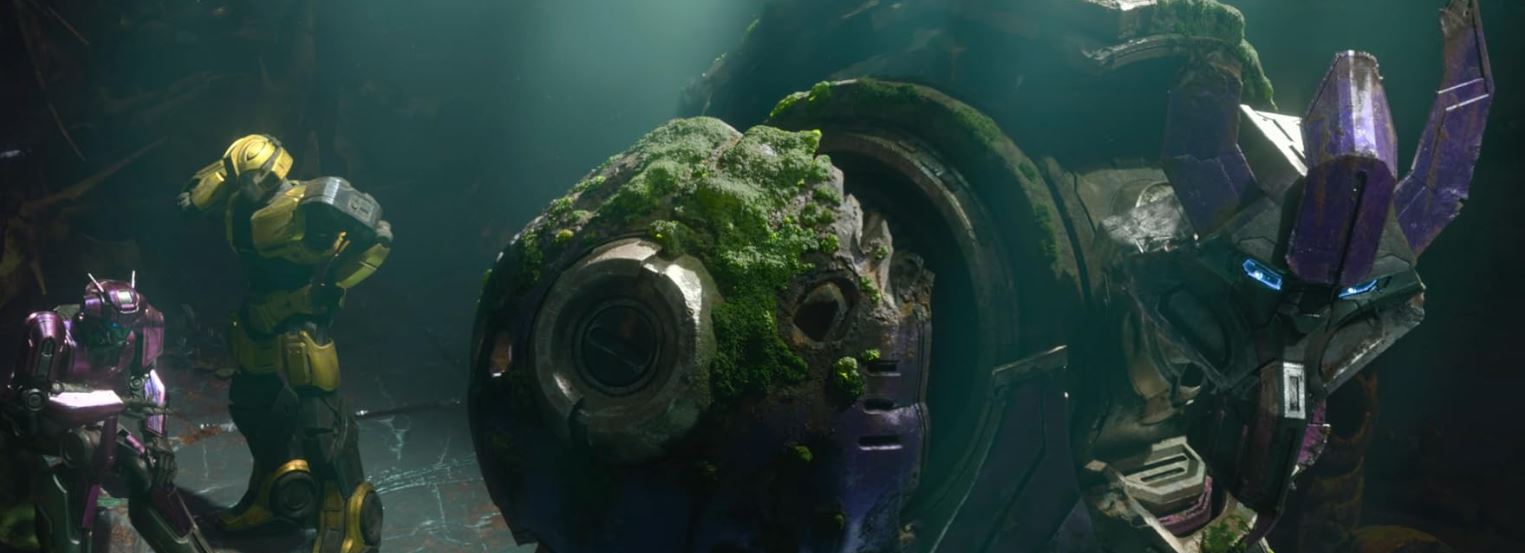
D-16 is the biggest fan of Megatronus Prime due to that Elder being the biggest and strongest of the bunch. D-16 is a miner who works hard, follows all protocols, and doesn’t seek something more. Megatron felt robbed because he only viewed his own efforts and not of those around him. Megatron has plenty of understandable viewpoints as the film progresses. He does what he’s told to do, puts forth his best effort, and sees those efforts get closer to fruition and advancement.
Those efforts are for naught due to Orion’s reckless and seemingly bad decision making. Taking risks and failing can be seen as a negative when several risks consecutively don’t pay off. However, as the law of averages goes, things will shift at some point, and the risks might just be rewarded. Such risks pay off as these four gain new powers, new knowledge, and new ideas after meeting Alpha. Megatron isn’t the only one who believes so ardently in protocols.
Elita could’ve gone down the same path Megatron did. Elita was all about learning and following protocol in order to maximize her efforts. But when learning new info, she became adaptable and that’s what made her such a good leader and someone to rely on. New info can lead to new ideas and new methods to get stuff done; Elita removed how she felt about things in order to move forward. It wouldn’t have been a surprise if instead Elita felt the same way, as she had numerous times where she had to start over due to Orion and D-16.

Flawed Beings versus Rigid Heroes
Placing people on pedestals does not serve anyone, especially those setting the placement. In this movie, the Elder Primes are seen as otherworldly, untouchable, figures of lore removed from the general public who have learned their stories. Because of the storied mythos rumbling about Cybertron as Sentinel makes miners work more and more, there’s an idea from some like Megatron that in order to reach such heights, dues must be paid.
Great efforts must be made to reach such status. This fuels the anger Megatron later has because he realizes that pathway is not how the Elders got there. In reality that anger manifests as outward retaliation for inner contempt and an unwillingness to accept he was wrong in his beliefs. Cue the reactiveness mentioned earlier.

Orion and Bumblebee don’t have this outlook issue. That’s largely because they both process that what they do and what’s in their control will dictate what’s possible. Effort is the key ingredient here as they hope for certain outcomes but do not rigidly expect such exact fruition.
This also leads to such absolute and relative viewpoints our main characters have when it comes to justice and vengeance. Punishing action appropriate to what was done is the justice Optimus and the other two believe to be right. Vengeance is the absolutist outlook Megatron takes because of his inability to accept new information without personalizing outcomes. Whatever serves his goals is why vengeance will be how he punishes Sentinel. This is the final cog that ends the friendship and begins their storied rivalry.

Final Verdict
Transformers One is a film for all ages that has lots of action, lots of jokes (some hit, others lead to headshakes), and a solid storyline. While this film hints at being more focused on grander themes for younger audiences to ponder and learn from, every age group can appreciate what’s before them. The lack of humans is superb and allows character development for everyone to flourish.
Classic characters like Jazz (Evan Michael Lee), Starscream (Steve Buscemi), Soundwave (Jon Bailey) and more have supporting roles. The animation is well done, the fight sequences are entertaining and well placed, and the colors are wonderful. This is one of those popcorn films where you can go and ponder grander ideas like this viewer did above, or you can cheer and laugh and enjoy two hours of robot mayhem. Hopefully Transformers One is the start of more stories without humans involved.
 Cypher Sessions
One thought on “Cypher Flicks Reviews Transformers One: New Lore Revisits Age Old Questions”