

By Daniel Paiz
It’s been a long time since a Hip-Hop documentary has been in theaters, but STANS wasn’t your typical Hip-Hop doc. A Cypher Flicks review is warranted for this limited release in theaters; this film was only available to watch between August 7th thru August 10th. Eminem may have purposely released this doc the weekend before Hip-Hop’s birthday of August 11th.
Either way, it was an intriguing way to celebrate the genre and culture this Detroit emcee thrives in.
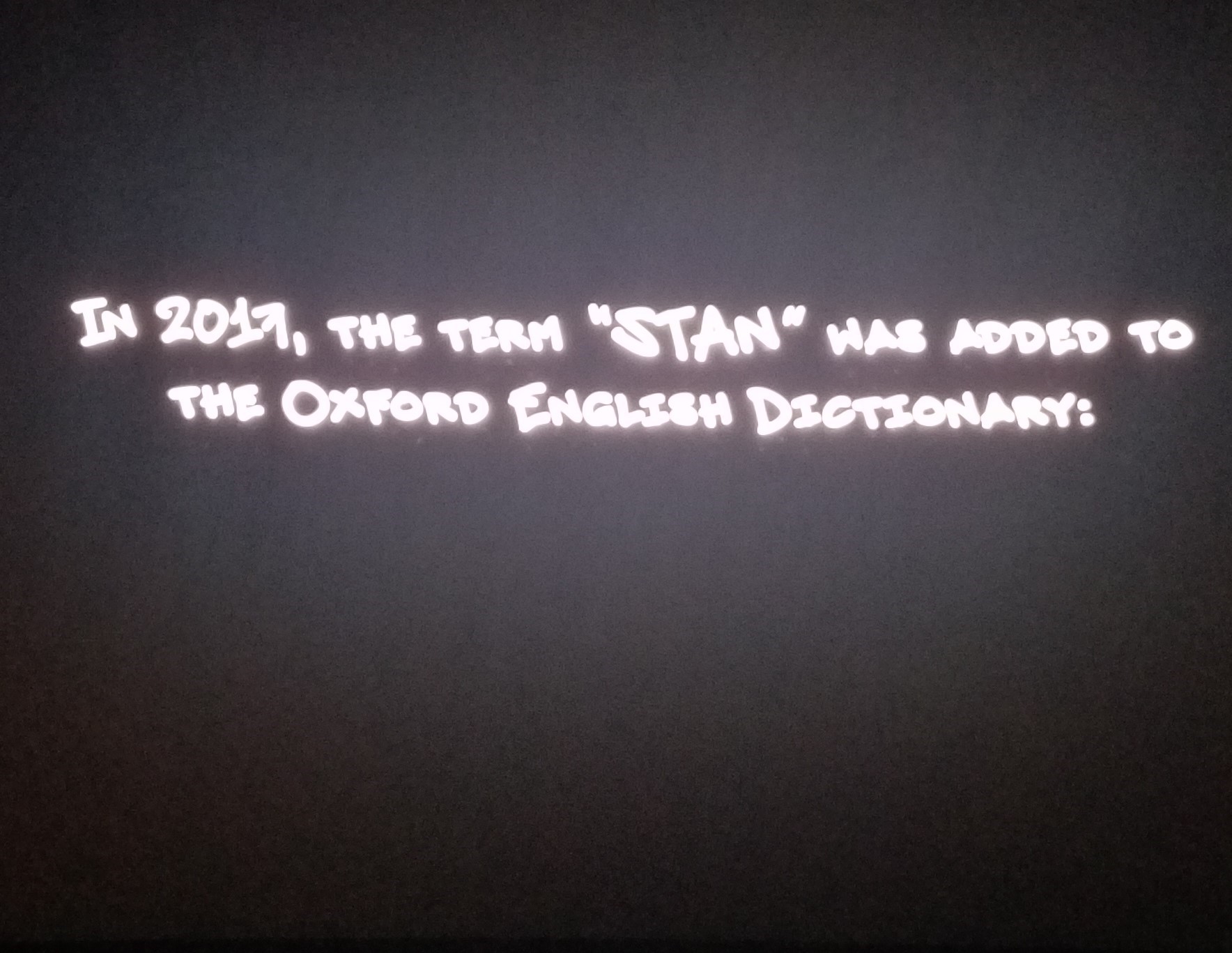
Brief Overview
Director Steven Leckart draws some clever parallels between major moments in Eminem’s career with experiences that stood out for fans of the emcee. The half dozen or so folks interviewed for this documentary share their love of Slim Shady, and the moments in life where his rhymes highlighted their own experiences. Fans reflect on how being bullied for wearing tight pants, being smaller than the other kids, or day to day life at home reminding them Em had similar experiences.
Nearly every fan seemed to reflect on how they didn’t want to be seen like Stan, despite writing letter(s) to the world renown wordsmith. These fans were acutely aware of how jarring it must have been to go from being a regular person one day to being globally recognized the next. For Marshall Mathers there was no blueprint on how to deal with that. Nobody in 8 Mile and nobody from Dr. Dre’s camp really had a blueprint for how to navigate fame, fortune, and the imprisoning nature that kind of success delivers.
There are other segments reflecting on the impact of Proof and his passing, as well as how he dealt with addiction and it landing him in rehab. The journey to come back from that was long and arduous. Embracing sobriety and focusing on his family seems to have gotten Em back on track.
Intriguing Moments

Eminem had a realization after reflecting on how impactful LL Cool J was in his formative years. Em stated LL impacted his love of Hip-Hop and his rhymes. That epiphany was simultaneously being very self-aware, but also being concerned about who he inspired:
LL got me through so much shit, oh my God am I LL for somebody else now?
That seemed to be one of many epiphanies Em has had throughout his rap career. Smaller epiphanies happened for those interviewed, as some folks related to songs due to dealing with a family that was not supportive of their transition. Family not supporting one’s path is all too real from Em’s earlier songs, and this person even legally changed their name to Marshall; it gave them strength.
One fan had lost her nephew, and they had a similar relationship to the connection Em and Proof had. She landed in the hospital after an overdose didn’t kill her but did damage. If one looks beyond the shock value and disregard for decorum in the earlier albums, there’s a lot of trauma, pain, and brokenness that fans connect to. This shows why fans have such a strong parasocial connection to this artist.
Final Verdict
Eminem is a different case to look at when it comes to emcees making a documentary. His career ballooned right when minute details became an obsession for fans and the internet helped to drive this incessant thirst for everything Marshall. Rappers before Em had more of the magazines, radio and TV shows pipeline to drum up interest. Artists after Eminem dealt with similar obsession. As time has passed since the early 2000s, people have more ways to cope with all of that.
The heart of the film is a two sides of the same coin kind of realization: the fans helped blast off his career, but those same fans made the fame a living nightmare. Eminem did himself no favors with satirizing other pop culture stars and using referential humor and wit to draw in fans. This is because making something to bond over weirdly added to the parasocial nature between fans and the artist. Plus, during the rise of Eminem, pop acts like Britney Spears, NSYNC and the like encouraged fan access to artists in ways not done at that scale before.
What’s also intriguing is how many of the fans that were interviewed were women and in one case a trans individual. That stands out primarily because critics of Eminem from the beginning have called the rapper misogynistic, homophobic, and one to joke at the expense of LGBTQ+ individuals. It is noted that anecdotal accounts don’t dissuade these claims, but it does offer another perspective. While it could also be seen as a cop out, the satirical nature of Slim Shady could be just that. Eminem routinely stated early on listeners should be able to decipher when he’s joking or not. Em will continue to be reviewed and dissected for years to come in these areas and beyond.
Whether you’re a STAN or not, this emcee has left a complicated legacy in Hip-Hop.

Bonus Content
Cypher Sessions doesn’t usually cover Eminem largely because the guy is one of the most successful artists of all time. That’s to say, while Em has underground roots, there’s nothing underrepresented about him as a quick online search will show. When it comes to music documentaries, that changes because a closer look at Em is a closer look at Hip-Hop. How the two entities interact and impact the music and culture as a whole is a fascinating road.
 Cypher Sessions